

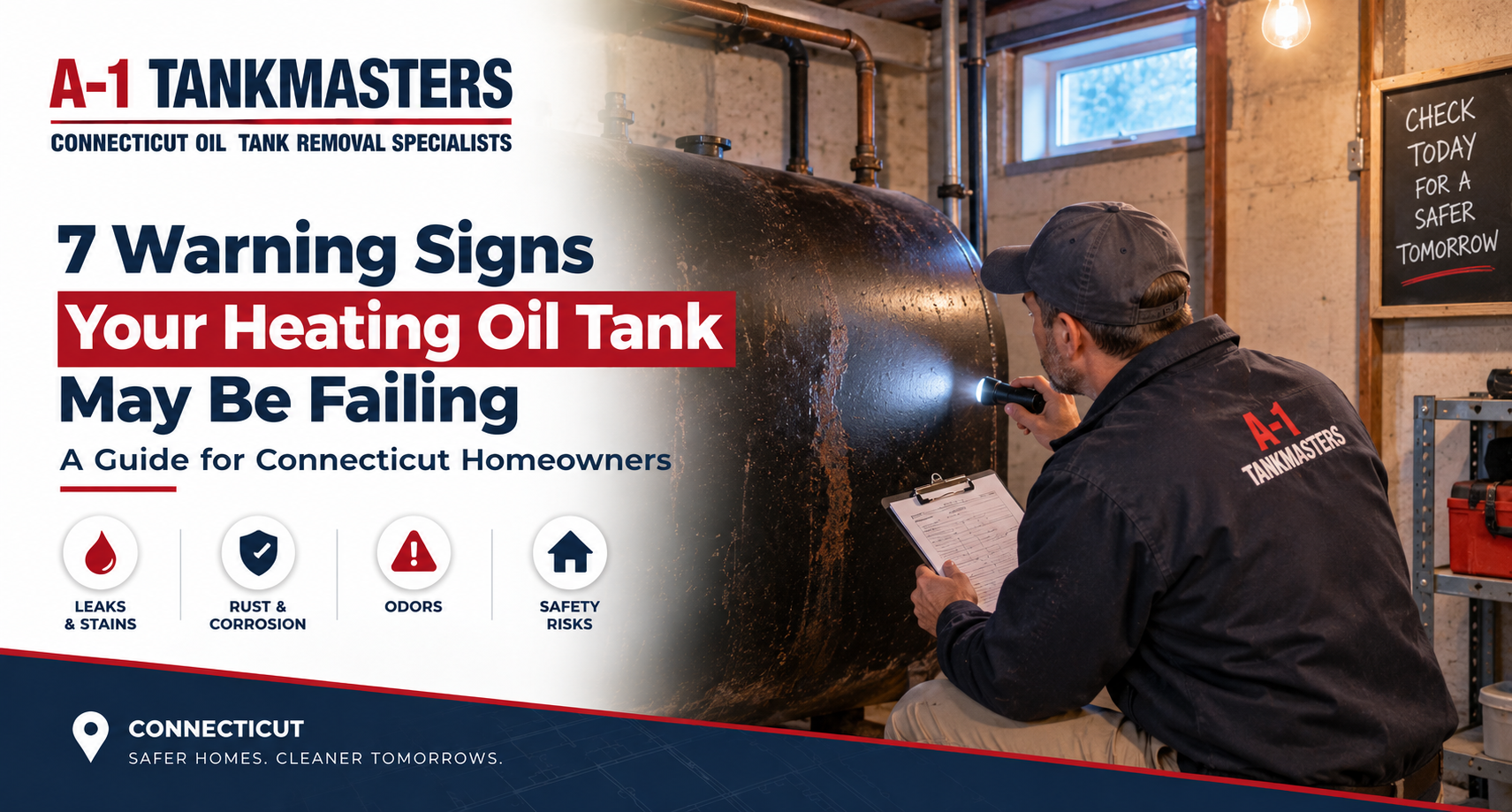
A heating oil tank is easy to forget about when it seems to be working normally. For many Connecticut homeowners, it sits quietly in a basement, garage, or outside the home and receives little attention until something goes wrong. However, like other parts of a heating system, an oil tank can deteriorate over time.
A failing tank can potentially lead to oil leaks, property damage, environmental concerns, and unexpected replacement costs. The good news is that some problems may show warning signs before they become more serious. Regular visual checks and professional inspections can help homeowners understand the condition of their tank. Here are seven warning signs worth paying attention to.
1. Visible Rust or Corrosion
Surface rust may seem like a minor cosmetic issue, but corrosion deserves attention, especially when it appears around the bottom of the tank, seams, fittings, or legs.
Moisture and condensation can contribute to deterioration over time. The outside of a tank also does not always reveal what is happening internally. If corrosion appears to be spreading, flaking, or weakening the metal, the tank should be professionally evaluated.
Companies such as A-1 TankMasters provide oil tank inspections along with removal, replacement, and environmental services for Connecticut properties.
2. Wet Spots or Staining Around the Tank
Look at the floor and surfaces around your heating oil tank. Dark stains, oily residue, unexplained wet spots, or discoloration beneath the tank may indicate a problem that needs investigation.
Do not assume a small amount of staining is harmless. Even when you cannot see an active drip, evidence around the tank may point to a past or developing leak.
Homeowners should avoid touching or attempting to repair a suspected fuel leak themselves. A qualified professional can determine where the oil is coming from and what action may be appropriate.
3. You Notice a Strong Heating Oil Odor
A persistent heating oil smell around the tank should not simply be ignored.
An odor does not automatically prove that the tank itself is leaking. It could potentially be associated with the tank, fuel lines, fittings, fill or vent components, or a previous spill. However, a new or unusually strong smell deserves prompt attention.
For homeowners considering Oil Tank Removal/Replacement—Glastonbury, having the system evaluated can help determine whether the tank needs attention rather than relying on appearance or odor alone.
4. The Tank Has Dents, Bulges, or Other Physical Damage
An oil tank should maintain its intended shape. Significant dents, bulging areas, deformation, or other visible damage may indicate that the tank has experienced stress or deterioration.
Pay particular attention to unusual changes around seams and the lower portion of the tank.
Physical damage does not always mean immediate replacement is necessary, but it should not be dismissed. A professional assessment can help determine the condition of the tank and whether continued use is appropriate.
5. Tank Legs or Supports Look Unstable
The tank itself is not the only component homeowners should inspect. Its supports are important too.
Check whether the tank appears level and whether its legs or supporting structure look stable. Rusted, bent, damaged, or shifting supports can create an unsafe situation because a filled heating oil tank carries substantial weight.
Homeowners researching Oil Tank Removal/Replacement—Hebron should consider the condition of the complete tank setup, including supports, accessible connections, and surrounding areas.
6. Fittings, Lines, or Connections Show Deterioration
Problems can develop around the components connected to an oil tank as well as the tank body itself.
Look for visible corrosion, staining, deterioration, or damage around accessible fuel lines, fittings, valves, and connections. These components should not be adjusted or tightened casually if a leak is suspected.
A professional inspection can evaluate the tank and accessible components together, which is more useful than focusing only on one rusty area.
7. The Tank Is Older and Its Condition Is Unknown
Age alone does not tell you exactly when an oil tank will fail. Installation quality, tank construction, location, moisture exposure, maintenance, and other conditions can all affect its service life.
The bigger concern is an older tank with little information about its history or condition. If you recently purchased the property, you may not know whether the tank has previously been inspected or repaired.
For property owners considering Oil Tank Removal/Replacement—Bolton, evaluating an aging tank before obvious failure occurs can provide useful information for planning future maintenance or replacement.
Why Early Attention Matters
Waiting for a visible leak is not the best way to determine whether an oil tank is in good condition. A developing problem may become more complicated if heating oil reaches flooring, soil, or surrounding areas.
If leakage is suspected, professional evaluation may involve more than inspecting the tank itself. Depending on the situation, environmental assessment or soil testing may also be appropriate.
Early attention gives homeowners an opportunity to understand the problem and discuss appropriate next steps before assuming that either a simple repair or complete replacement is required.
Final Thoughts
Heating oil tanks are often out of sight, but they should not be completely out of mind. Connecticut homeowners should periodically look for rust, staining, unusual odors, physical damage, unstable supports, deteriorated connections, and signs of aging.
Finding one of these warning signs does not automatically mean the tank has failed. It means the condition deserves closer attention. Regular inspection and timely professional evaluation can help homeowners make informed decisions about maintaining, removing, or replacing an aging heating oil tank.